Faculty Research

The Global Food Systems Program is home to faculty affiliates from across Harvard University whose research spans agribusiness, policy, climate, health, and technology in food systems. Their work is published in a wide range of academic and policy venues and can be found through the search and filters below.

Impact of the Food and Drug Administration’s Proposed Front-of-Package Label and Alternative Designs on Consumer Understanding: A Randomized Experiment

In January 2025, the Food and Drug Administration proposed mandating Nutrition Info front-of-package labels, which would indicate whether packaged foods are low, medium, or high in saturated fat, sodium, and added sugars. This online randomized trial of 5,636 U.S. adults who were primary grocery shoppers tested whether a label similar to the FDA’s proposal improves consumer understanding compared with positive endorsement and other proposed or adopted front-of-package labels. Compared with positive labels, Nutrition Info labels led to the greatest improvements in consumers’ ability to identify the healthier of two products (18.4 percentage points), followed by positive + Nutrition Info, positive + high-in, spectrum, and high-in labels. Effects did not differ by income, education, or race/ethnicity but were larger for participants with higher nutrition literacy. The findings support the FDA’s initiative to implement mandatory front-of-package labels, while noting that Nutrition Info labels may not serve all nutrition literacy groups equally.


Two shoppers examine the nutrition facts panel on a product in a grocery store
Shoppers examine a nutrition facts panel. Photo: USDA Agricultural Research Service

A metabolomic signature of the Mediterranean diet predicts mortality in 4 independent cohorts

The Mediterranean diet (MedDiet) reduces cardiovascular disease, type 2 diabetes, and other chronic diseases. Adherence has mainly been assessed using self-reported questionnaires, and no previous study has addressed whether an objectively measured plasma metabolomic signature of MedDiet adherence is associated with long-term all-cause mortality. We show that a plasma metabolomic signature of MedDiet adherence was inversely associated with long-term all-cause mortality in PREDIMED and replicated in 3 independent United States prospective cohorts, providing objective biomarker support for the long-term protective potential of the MedDiet.

Mediterranean foods: tomatoes, olives, feta, basil, and olive oil on a slate board
Photo: Daniela Elena Tentis (CC0)

Uncertain yields: The challenge of predicting solar radiation management impacts on agricultural productivity

Solar radiation management (SRM) is an increasingly discussed approach to counteracting anthropogenic climate change and its impacts on human and ecological well-being. Here, we argue that while the effect of SRM on temperatures is relatively well understood, there are substantial uncertainties in the agricultural benefits and costs of SRM deployment.

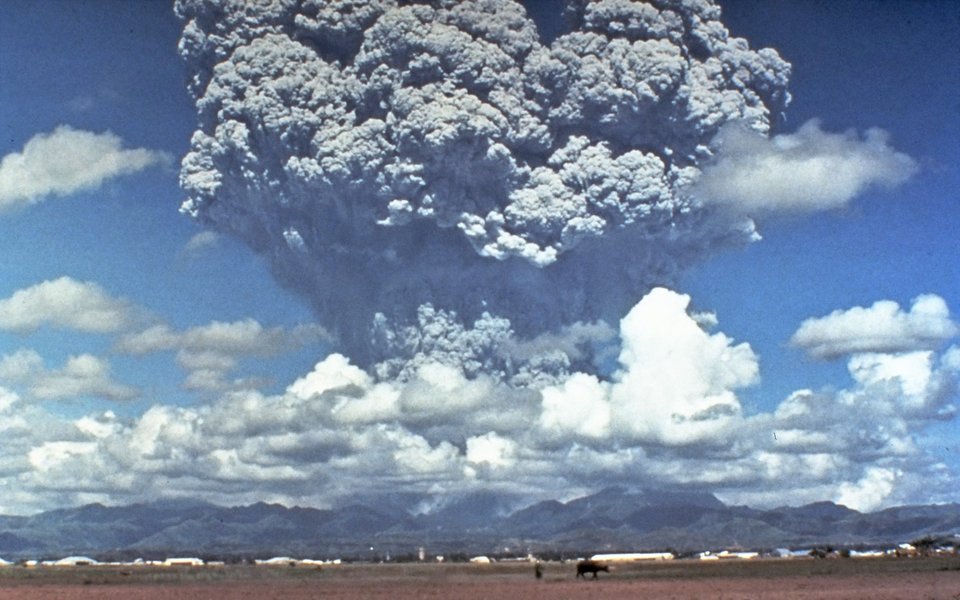
The 1991 eruption plume of Mount Pinatubo rising into the sky
Mount Pinatubo eruption, 1991. Photo: Dave Harlow, USGS

Association of self-reported alcohol consumption compared with abstention with major adverse cardiovascular events, cancer, and mortality among United States veterans: a cohort study from the Million Veteran Program

Alcohol consumption is a common behavior among United States veterans, yet its impact on long-term health outcomes remains incompletely understood. Among 438,442 participants in the Million Veteran Program, alcohol consumption was associated with mortality and major adverse cardiovascular events in a J-shaped pattern, with lower risk observed at moderate consumption levels compared with abstinence or heavier drinking. However, alcohol consumption demonstrates a linear dose-response relationship with cancers, with increased risks for alcohol-related cancers even at moderate consumption levels. The alcohol and head and neck cancer association was significantly exacerbated by smoking.

Shelves of assorted liquor, wine, and spirits bottles behind a bar
Photo: Unsplash via Wikimedia Commons (CC0)

Rainfall extremes drive cocoa yield losses across the tropics

There is a growing need for human-centered weather and climate forecasts that provide actionable information to farmers and other stakeholders. Cocoa, which sustains the livelihoods of nearly six million smallholder farmers, illustrates this need: Recent production shortfalls have threatened incomes, yet their underlying causes remain unclear, with explanations invoking both climatic and nonclimatic factors. Here we show that heavy rainfall, rather than temperature or mean water availability, is the dominant climatic constraint on cocoa yields across major producing regions. Using newly available district-level production records from Ghana combined with daily rainfall and temperature data, we find that excess wet-season rainfall and dry-season drought together explain 68% of interannual yield variability. National yield data from Ecuador and Indonesia also give a consistent negative response to heavy rainfall, indicating a common mechanism across the tropics, likely linked to damage and disease risks associated with intense precipitation during key phenological stages. Because rainfall extremes covary with El Niño and other sea surface temperature patterns, and there is a robust physical expectation of increases in rainfall extremes with warming, these results provide a physical basis for risk forecasts. By shifting attention from average climate conditions to extreme precipitation, we highlight an underappreciated constraint on a perennial tropical crop and identify opportunities for adaptation and forecast-informed decision-making.

A ripe cacao pod on a tree
Cacao pod. Photo: USDA Agricultural Research Service

Additionality and Asymmetric Information in Environmental Markets: Evidence from Conservation Auctions

Mechanisms that aim to reduce environmental degradation at low cost can be undermined when participants’ conservation actions are not marginal to the incentive—or “additional”—as the lowest-cost participants may not be the highest social value. We investigate this challenge in the Conservation Reserve Program’s auction mechanism for ecosystem services, linking bids to satellite-derived land use. Three-quarters of marginal auction winners are not additional. The heterogeneity in counterfactual land use introduces adverse selection. We develop a model of bidding and additionality to quantify welfare implications. Alternative auctions increase efficiency by using scoring rules that incorporate expected land use impacts.

A Conservation Reserve Program field planted with native grasses and wildflowers under a blue sky
CRP field planted for pollinators. Photo: Mark Vandever, USGS

Irrigation and Climate Change: Long-Run Adaptation and Its Externalities

As the largest user of water, irrigated agriculture accounts for 20% of global cropland and over 40% of food production. Irrigation is also a potential adaptive response to climate change. This study examines the extent to which the current global irrigation footprint reflects climate change over the last 50 years. Utilizing variation in local climate, I find that increasing drought conditions over time are associated with irrigation expansion in areas with groundwater potential. The results hold both globally and in the United States. GRACE satellite data suggest that this expansion of irrigation can contribute to aquifer stress and increased soil salinity, which represent potential negative externalities of climate adaptation and a threat to future food security.

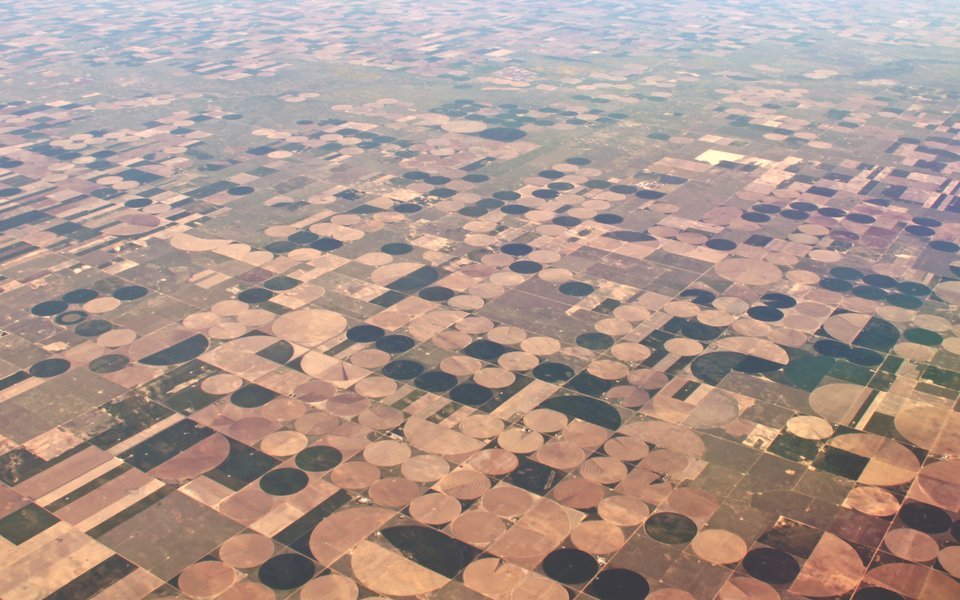
Aerial view of circular center-pivot irrigated fields across farmland
Center-pivot irrigation from the air. Photo: John A. Kelley, USDA NRCS

Using markets to adapt to climate change

Research shows if and when markets can help limit the harms from climate change. Even under ambitious mitigation, climate change will affect human well-being for generations, making adaptation a necessary complement to mitigation. Drawing on a growing body of economic research, the authors identify when and how markets can be a promising tool for effective and efficient adaptation: by making existing markets work better through transparent climate-risk information and the removal of counterproductive subsidies and price controls, and by building markets that are missing—for climate-resilient technologies, risk sharing, and natural resources such as water. They also discuss where markets are insufficient and nonmarket policy tools, including those addressing fairness and public goods, are more appropriate.

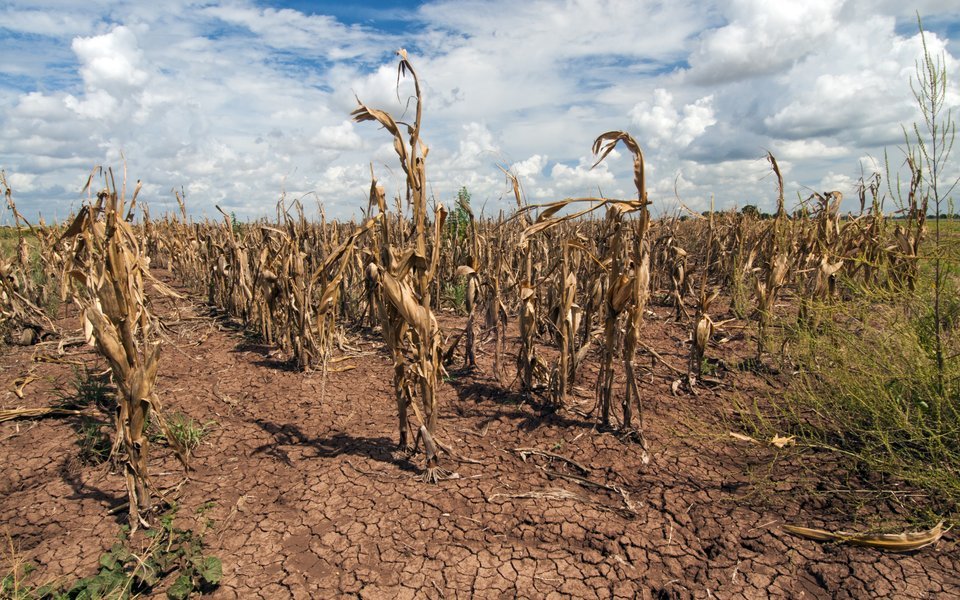
Drought-damaged corn stalks on cracked soil in Texas
Drought-stricken corn, Texas, 2013. Photo: Bob Nichols, USDA

Climate Change, the Food Problem, and the Challenge of Adaptation through Sectoral Reallocation

This paper evaluates the potential for global reallocation between agricultural and nonagricultural production to contribute to climate change adaptation. Empirical estimates using a global sample of firms suggest that rising temperatures reduce productivity less in nonagriculture than in agriculture, implying large potential gains if hot countries could increase food imports and shift labor toward manufacturing. However, model counterfactuals show that subsistence consumption needs and high trade barriers combine to create a “food problem” in which climate change instead intensifies agricultural specialization in especially vulnerable regions. Simulations suggest that reducing trade barriers can significantly reduce climate damages, especially in poor countries.

Conveyors and silos of a grain export elevator on the Mississippi River near New Orleans
Grain export elevator on the Mississippi River, Louisiana. Photo: USDA